








Mastering photo and video exposure
Subscribe to Plus
Subscribe to Plus for unlimited access to premium courses.
Course requirements
Who is this course for?
About This Course
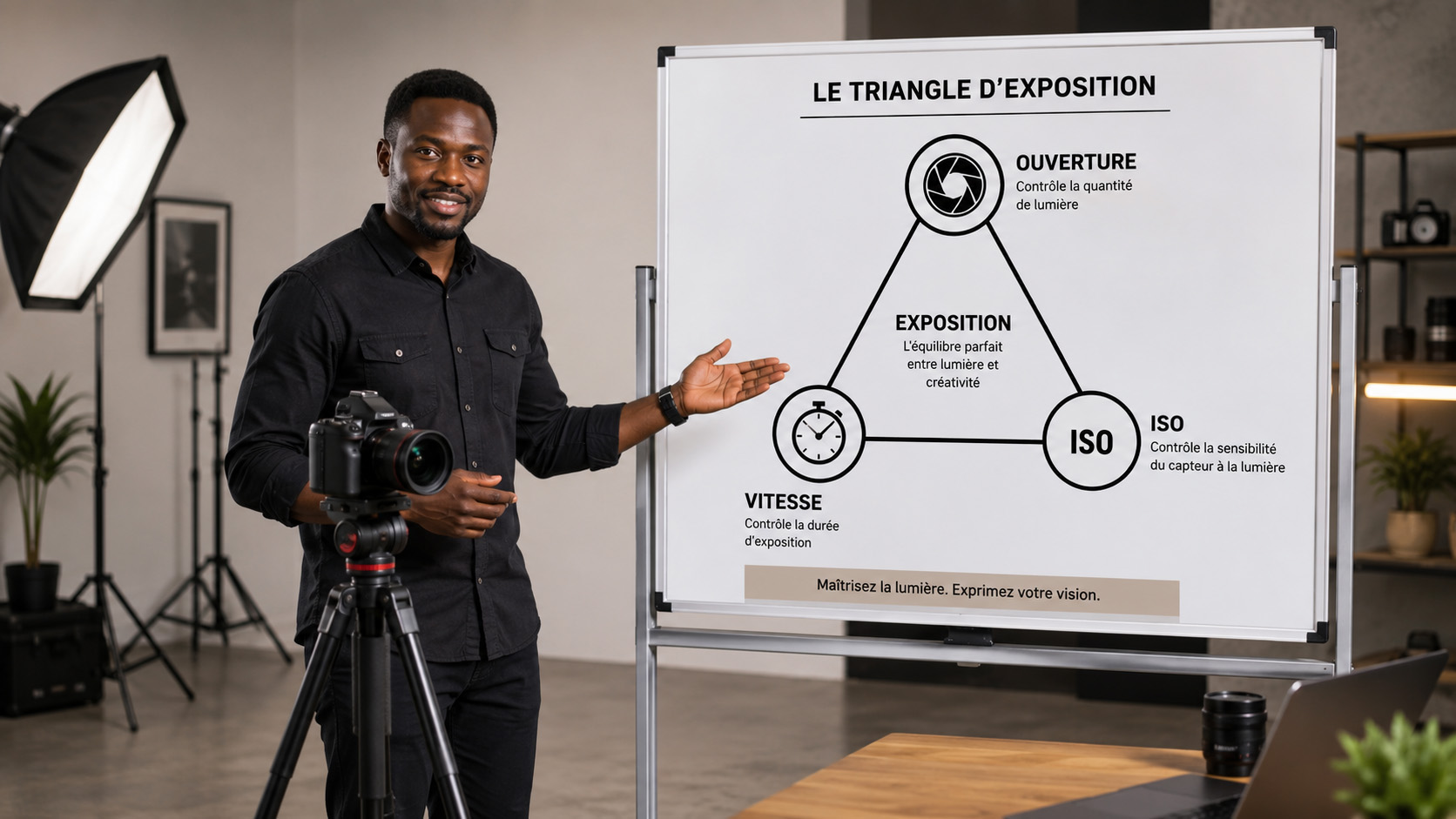
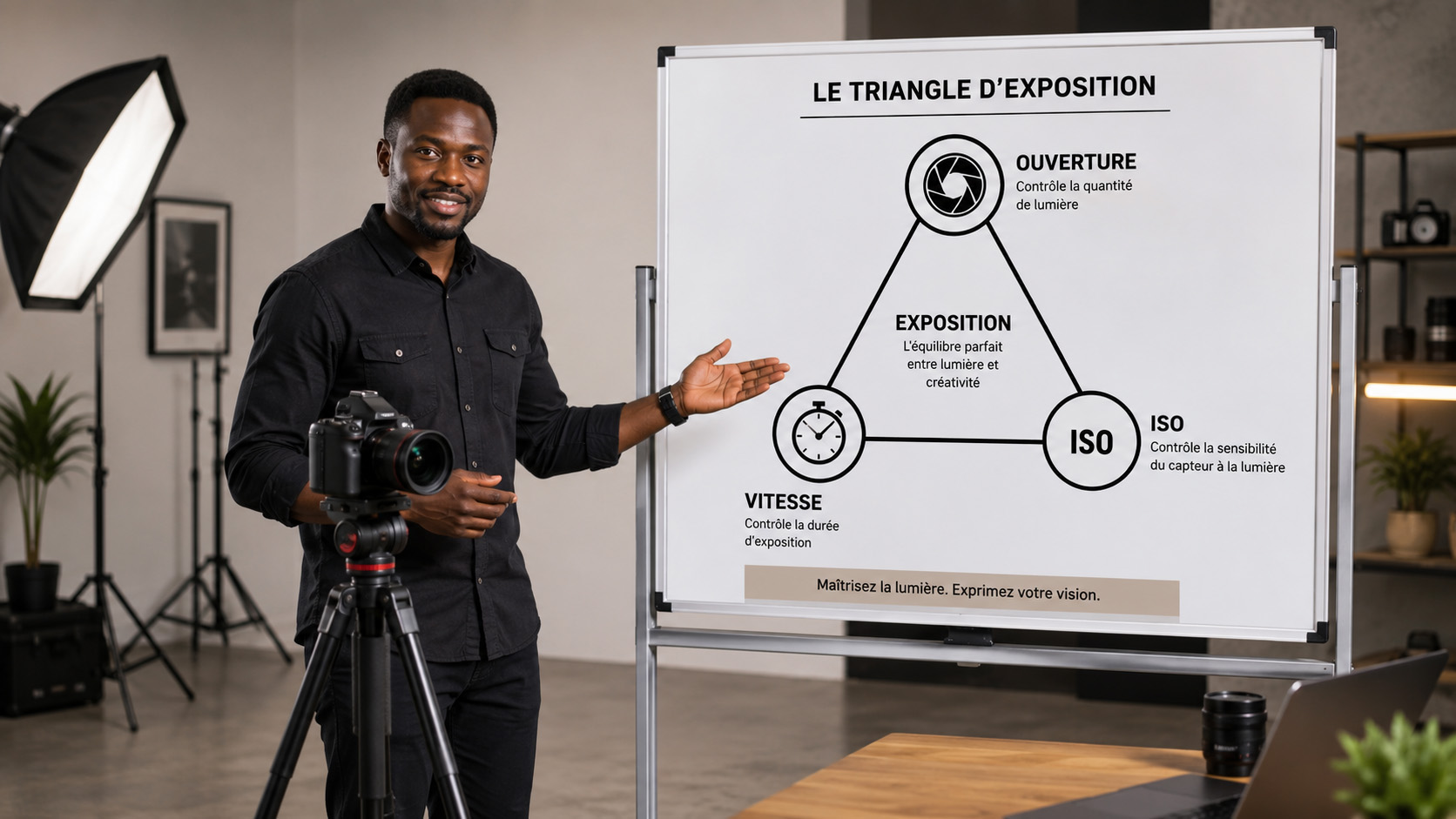
Learn to master photo and video exposure to achieve sharper, brighter, and more professional images. This course guides you step by step in understanding the exposure triangle: aperture, shutter speed, and ISO.
You will discover how to set your camera, camcorder, or smartphone in Pro mode to avoid images that are too dark, overexposed, blurry, or noisy. Through simple examples and real-life situations, you will learn how to successfully take a portrait, film a video facing the camera, photograph in low light, manage a moving subject, and maintain stable exposure in video.
This course is ideal for beginners, content creators, amateur photographers, videographers, entrepreneurs, trainers, and community managers who want to improve the quality of their photos and videos without getting lost in the technique.
By the end of the course, you will know how to choose the right settings according to the light, subject, and desired effect. You will be able to gradually leave automatic mode and produce cleaner visual content for social media, training, events, interviews, products, and professional projects.
What Will You Learn?
Gallery image
Gallery image with text



Curriculum Overview
This course includes 6 modules, 21 lessons, 2 quizzes, and 1h 14min hours of video.
Understand why exposure is one of the first elements to master in order to improve your photos and videos.
Know how to recognize an underexposed, overexposed, or correctly exposed image.
Understand the three settings that control exposure: aperture, shutter speed, and ISO.
Simply understand the concept of stop to better compensate for exposure.
Check your understanding of exposure, its effects on the image, the exposure triangle, and stops.
Know how to choose which setting to modify first according to the situation.
Understand the role of the ISO and know why it should be used with caution.
Understand how shutter speed influences light and motion.
Understand how aperture influences light and depth of field.
Understand when to use manual mode, aperture priority, or shutter priority.
Knowing how to enhance a photo in low light without unnecessarily increasing the ISO.
Knowing how to choose an appropriate speed to photograph a moving subject.
Knowing how to adjust your device to take a well-exposed portrait with a background
Identify common video exposure mistakes and know how to avoid them.
Know how to display a video with the available light sources before excessively modifying the settings.
Understanding how to choose a natural shutter speed in video.
Understand the important differences between exposure in photography and exposure in video.
Apply a simple method to quickly adjust your device in real-life situations.
Know how to use the control tools to check if an image is well exposed.
Project objective:
Put the exposure triangle into practice in several real-life situations.
Mission:
Your mission is to produce a small complete series to verify your mastery of exposure.
Create:
1. A portrait with a slightly blurred background.
2. A photo of a moving subject.
3. A low-light photo with controlled ISO.
4. A short video facing the camera with stable exposure.
5. An image or video corrected after analyzing the exposure.
For each production, note your settings: aperture, shutter speed, ISO, light used, and difficulties encountered.
Practical advice
Don't just aim to get a beautiful image. Focus especially on understanding why the image works: which setting was prioritized, what correction was necessary, and what you would do better next time.
Test your knowledge acquired during this training.
Course Certificate


Course reviews

Instructor
This Course Includes
Course Specifications
Send Course as Gift
.svg)
.svg)

.svg)
Leave a Comment
Please log in to leave a comment.